Review: Unreliable Memoirs by Clive James

Forty-something years ago when I was a penniless student I would head to the Student’s Union every Sunday morning to commandeer the library’s copy of The Observer. The first article I turned to was Clive James’ TV review. These columns were, in my youthful opinion, both the funniest and most intelligent pieces of writing to be found in the British press. So when Unreliable Memoirs appeared in about 1980, I devoured it in a single sitting.

I was not disappointed: the book had me in stitches from beginning to end but was leavened with a grown-up appreciation of just what a little shit the young Master James had been. All written in a somewhat regretful tone that implied life’s lessons had ultimately been absorbed. That transition seemed to be underway in the last chapters of the book where Clive, having survived the best effort’s of The Lucky Country’s educational and military Establishment, heads to London to find his destiny.

James was born in 1939 – as he notes another ‘big event’ started that year, World War 2. That war took his father, most cruelly when his plane crashed on the way home to Autralia after the defeat of Japan.  Thus was the scene set for the central pillar of James’ story, the desperate attempts of his mother to bring the boy up to be a decent human being. His obstinate determination to resist her ministrations supplies the tragi-comic narrative drive. 

Reading the book again – a lifetime later and with Clive James at death’s door, it remains undeniable that he is one of our great comic writers. Despite trying to soberly evaluate the text for this review I was unable to resist spontaneous outbursts of incredulous guffawing as another brilliant anecdote was detonated by a perfectly timed punch-line. 

The action progresses from the young Clive’s hair-brained schemes to relieve the boredom of life in the Sydney suburbs, to his discovery of girls, a pretentious coming-of-age and ultimate (probably) enlightenment. The younger generations will scarcely believe the freedom accorded young children in those far-off days; but it all rings true to me as my childhood was much the same.  Particularly during summer holidays, we were shown the door after breakfast and not expected back until dark. Clive was more inventive than we were – there was no Flash of Lightning down my street – and more destructive.  Nor can I say I really remember the exhausting battle-of-wills with mothers that Clive always managed to win. Perhaps I was just less perceptive.

For me the book really came alive with the dawning of Clive’s self-consciousness. His obsessing about the shape of his head, the size of his tool and the steps he took to disguise them seem to me absolutely true as well as hilarious. It immediately reminded me of sitting in Chapel aged probably about ten with my school mates. Bored with the sermon I cast my eyes around at the array of bare knees projecting from the shorts of the surrounding boys.  It seemed to me that they all had bigger and better defined knee-caps than I had. I slid my hands over mine to hide my deformity and worried about it for days. Such are the concerns of tiny minds. 

James is more hilarious still when he gets on to his attempts to captivate the opposite sex. For a while I was sure he had read my mind as he skewered the adolescent feelings of desperation, inadequacy and hopeless longing. The useless strategies to get noticed particularly resonated with me. His performance as the ‘short, swiftly moving philosopher’ made me go red with recognition of similar stupidities.

For me the book loses its edge when Clive leaves school – perhaps it did for him to as this section of the book is relatively brief – the chapters on National Service feel imported from another story. So too the University career seems somewhat contrived and formulaic. Was he really the uncaring pretentious prat of these later chapters?  If so the implied transformation to mature author of the Memoirs seems too miraculous.

A solution to this last point may be that the transformation was not as radical as James believed. His subsequent TV career illustrated a surprising (to me) taste for trivia and celebrity. He has continued to write some great stuff but also some ponderous rubbish. He is still a wonderful critic. My take is that he has been too desperate to be perceived as part of the literary firmament. Hence, for example, he has tended to load his work with literary allusions which may not always enlighten the reader. A good example is the epigraph to Unreliable Memoirs ; an extract from The Iliad wherein Andromache laments the difficulties she will face in bringing up her son after the death of her husband Hector. Pretentious ? Moi ?

Review: Far From the Madding Crowd, by Thomas Hardy

After a series of relatively recent novels it was a bit of a jolt to go back nearly 150 years with Thomas Hardy. I read much of Hardy in my youth and I remember it provided a longed-for escape from grim 1970’s Glasgow. Much of what I loved about Hardy came flooding back – the nostalgia for a rural way of life long since vanished;  the vivid and acute descriptions of the Wessex landscape and villages and the creation of compelling, if sometimes infuriating, characters such as Bathsheba and Sergeant Troy (Gabriel is a bit of a bore, is he not)?

But reading Far From the Madding Crowd again in the very different world of 2019, I found myself torn between the lyricism of Hardy’s writing and the ‘world-view’ that underpins the story. Hardy wrote the story during the high water mark of Victorian England. The country was rigidly organised by social class and morality was dictated from on-high by the Church of England: people knew their place. To be sure, Hardy was in many ways a fervent critic of the Victorian establishment – but what did he want to put in its place? Well, let’s first consider the story and how Hardy tells it.

In barest outlines we are dealing with a love story in which beautiful, headstrong Bathsheba Everdene is pursued by three very different men. Stolid, loyal Gabriel is first  to fall for her but she rejects his prosaic advances. Late she draws the attention of a wealthy, middle-aged farmer – William Boldwood – by a thoughtless Valentine prank, but she has no romantic interest in him either. However, Boldwood persists and comes to believe that she might marry him regardless. Alas, Bathsheba then encounters the dashing soldier, Sergeant Troy, with whom she makes a catastrophic marriage. 

Hardy leaves us in no doubt that Bathsheba’s predicament is a simple consequence of the fact that she is female. Although Hardy occasionally toys with the idea that men can be prisoners of their emotions too, he makes it abundantly clear that in letting their hearts rule their heads, women are the weaker sex. To be fair to Hardy he does portray Bathsheba as in many ways a remarkable woman – taking charge of the family farm as she does was not thought of as women’s work. ..but

When Sergeant Troy disappears, presumed drowned, Bathsheba again reveals her feminine weakness. Unable to sustain the fortitude necessary to carry on alone she allows herself to be browbeaten into rekindling her relationship with Boldwood. The dreaded engagement is all but formalised when Troy miraculously reappears to scupper Boldwood’s happiness once again. Poor Boldwood, out of his mind with frustrated love shoots Troy dead so leaving the coast clear for the faithful Gabriel. But the Gabriel and Bathsheba who finally wed are not the young and wilful pair from the beginning of the story – their union is not one of high emotion but of mutual understanding.

Of course there is much more, and much more complexity to the story than this 21stCentury critique suggests. Hardy allows Gabriel and Bathsheba to finally wed but that is after many asides about the folly of love and the disappointments of married life – most brutally expressed by Troy: ‘All romances end at marriage’. Nor is it necessarily a happy ending,  as the tale is rounded out by Joseph Poorgrass’ observation that ‘it might have been worse’. 

Neither is Bathsheba the only one who lets her heart rule her head. Smallwood literally goes mad with grief when his years of wooing Bathsheba come to nought. And Hardy starts the book by having Gabriel fall in love with Bathsheba, showing that even the most sensible of men are vulnerable to the irrational desires of the heart. But Gabriel does not fall apart when Bathsheba rejects him, nor when he loses his flock of sheep and with it his livelihood. He battles stoically on until eventually he gets his just reward.

Gabriel then seems to be the character whom we are meant to admire and respect. Admirable in his approach to daily life, he does his best without complaint. His only unorthodoxy is his less than enthusiastic religious temperament. This chimes with Hardy’s disregard for the church and Victorian morality. A little less religion and a little less social hypocrisy seems to be the prescription; not a terribly inspiring message for such an unequal society as that Hardy was writing in.

Looking beyond the plot though, Hardy’s evocation of the Wessex landscape is wonderful. From his description of how a winter coat of ice and snow alters the way the moon illuminates the landscape to his celebration of the star-strewn night sky, with the earth rotating palpably beneath it, Hardy brings the west country to life so vividly you can just about smell it.

In a similar way his deep knowledge of the country he is writing about enables him to capture a whole way of life – from the harvesting, to the sheep shearing to the country fairs. Everything is brought to life with such loving detail that you feel you know this world. Whenever I am in the west country Wessex feels more real to me than the ‘real’ counties like Dorset and Somerset and I wonder if some of those flocks of sheep do not belong to Gabriel and Bathsheba’s descendants.

Finally it is worth just noting how Hardy expected his readers to be familiar with The Bible and serious literature. Even the least educated of his yokels could quote, albeit badly, from the Old Testament and Hardy used many biblical stories to emphasise, or undermine, his account of the goings on in Wessex. This as much as anything reminds us that Hardy and the world he wrote about have long since disappeared. 

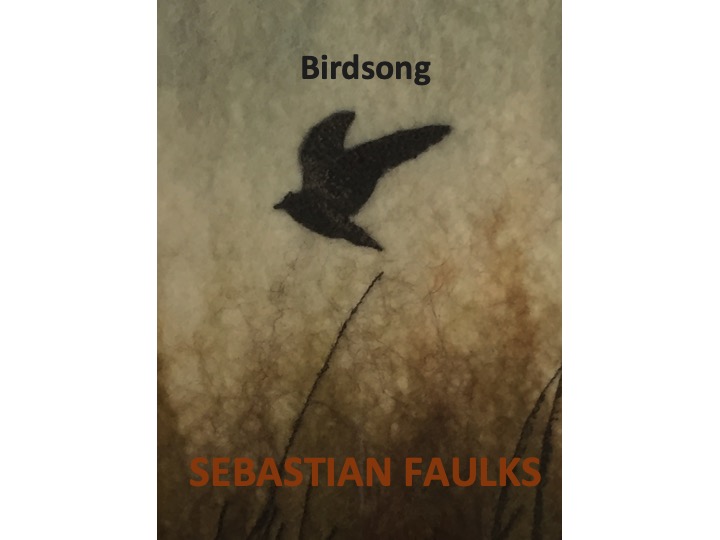
Review – ‘Birdsong’ by Sebastian Faulks

The horror of the First World War inspired (if that is the right word) a great outpouring of literature and other arts. But it is fascinating to see how the combatants themselves responded to the unspeakable events that they were witness to, compared to later writers. The War is especially renowned for the poetry it inspired – all British schoolchildren are familiar with the works of Rupert Brook, Wilfred Owen, Siegfried Sassoon and many others. It is as if the only possible response to such carnage, from those who directly experienced it, was a visceral outpouring utilising the most concentrated form of literature we have – poetry. Nothing else could match the terrifying intensity of their subject matter. Perhaps the novel seemed to artificial, too contrived for those that the war had tested to destruction. Its interesting, to me at least, that those who choose a longer form often used biography – think of Graves’ ‘Goodbye to All That’ or Sassoon’s ‘Memoirs of an Infantry Officer’.

But the novelists eventually got going, and once started have never stopped. Sebastian Faulks’ ‘Birdsong’ is one of several relatively recent efforts by British writers. Now 25 years old, the novel tells the story of the western front as experienced by a young officer called Stephen Wraysford. The horror of the trenches is prefaced by an account of a love affair Stephen had in France a few years before the war began.  An account of Stephen’s descendants 50 years after the war completes the structure of the story.

The central part of the book dealing with the trenches and tunnels of the western front is staggering in its no-holds barred account of what the soldiers had to endure. Some of it I could hardly bear to read. In the episode where Stephen and Jack Firebrace are trapped underground in a tunnel blown up by the Germans I felt gripped by claustrophobia – to the extent that I felt myself spontaneously  lashing out with my arms to confirm that I was indeed in my study and not in that god-forsaken tunnel.

Beyond simply relating the nature of life under fire the story also examines the psychological effects on the men and their attempts to retain some vestige of humanity under unendurable conditions. The scene in which Stephen and Weir, facing potential imminent death, argue over the fate of a canary powerfully brought home to me how people’s conception of right and wrong can shine through – even in extremis. The portrayal of the mentality of the soldiers as they went into action – from almost paralysed with fear to euphoria at being alive and finally to unhinged savagery, also rung true. And Faulkes makes clear the long-term consequences of this repeated exposure to unbearable horrors – all of these men suffered untold psychological damage – PTSD hardly does it justice. What must western Europe have been like in the years after the war when entire nations must have been traumatised ?

Whilst I enjoyed (again probably not the right word) the chapters about the war I was not convinced by the rest of the book. It is good to be reminded that people who are caught up in wars had a life that preceded it ; and that life will go on, no matter how intolerable it may seem at times. But to spend the first 100-odd pages on an unconvincing (to me) love story was like leaving the warm-up act on stage for far too long. I do see the logic of the final section, set fifty years after the war – it is quite a clever way of finishing off the story without using a standard epilogue. But again I couldn’t get very interested in the lives of this younger generation ; they were just too bland and self-obsessed compared with the horror of what went before – but I suppose that is the reality of it – those men died so that we remained free to be as boring and selfish as we like.

So all-in-all a very powerful account of war somewhat diluted by the authors desire to stitch these events into ‘The Great Chain of Being’.

Review : Nine Perfect Strangers by Liane Moriarty

Throwing a diverse group of people together by chance or design – an ailing aircraft, a sinking ship, a burning building – and subjecting them to extreme events is an staple beloved especially of Hollywood. Under pressure of events the carefully fabricated personas of those trapped together are deconstructed and the protagonists forced to look into their souls – or at least confront the reality of their little lives. Those who survive we expect to see transformed, usually for the better.

Liane Moriarty gives the genre a new twist with her nine guests  who rock up to an exclusive Australian health resort expecting the usual expensive round of fasting, exercise and New-Age bullshit.  Most arrive in a state of resigned cynicism, expecting little more than a few days relief from their humdrum problems. Little do they know that their Russian hostess, Macha – a beautiful, driven, former Corporate Supremo – takes their transformation far more seriously than they do themselves.  

The plot follows the usual conventions of the genre – the looming disaster is forewarned by a series of minor, but escalating, disconcerting events orchestrated by Masha and her team : unacknowledged searching of possessions, uninvited entering of bedrooms, practically forced extraction of blood samples. But these intimations of the trials to come fail to convince the guests that they are undergoing anything other than Masha’s radical therapy. Only when one of the guests (Heather, a midwife, whose son has committed suicide) realises that Masha has been drugging them does the precariousness of their situation dawn on them …but too late. 

I won’t spoil the plot by describing the trials that Masha has prepared for her guests. Suffice it to say that they are sufficiently grave to provoke the anguished navel-gazing that she, and we, expected. Unfortunately, for me at least, their ordeal did not lead to any profound insights into the human condition. At best the characters became a little nicer, a little less paranoid, a little more at ease with themselves. 

So a story with an interesting set-up fizzled out in a credulity-straining climax and a feel-good (over-extended) ending.  It felt to me like a book rushed out to cash in on the success of ‘Big Little Lies’.

Introduction – The God of Small Things by Arundhati Roy

This Booker-Prize winning novel (2010) is an extremely complex and challenging work that impresses and infuriates in equal measure. I don’t quite know yet what to make of it. So these are just some first impressions – I am sure I will have more to say when I have read it again.

The story is set in Kerala, in the extreme southwest of India. The main events take place in the 1960’s, whilst there is a sort of ‘epilogue’ where we encounter several of the key characters quarter of a century later. Not that the story unfolds in a linear fashion – just as in ‘Everything I Never Told You’, we are pulled back and forwards in time. 

The story is framed by the cultural and political history of the Indian sub-continent. We are in post-colonial times (the British left in 1947) and Chinese-inspired communism is galvanizing the country, frightening the wealthy, be they landowners or landlords. Social structure is complicated not just by politics, but by religion. The bulk of the people are Hindus whilst many of the wealthy are from other religions – in this case the family at the centre of the story are Christians. But the religious groups themselves are split into factions or castes to create an extremely complex human backdrop to the story. At the very bottom of the pile come the ‘Untouchables’ one of whom is a key character in the story. Complex social rules govern the interaction of people from different religions and castes; breaking the rules leads to social exclusion or (much) worse.

To further complicate things there is also the divide between men and women: men hold essentially all the property rights and the power, whereas women are merely required to get married and bear children. All this gives rise to a permanent, seething tension that drives the events of the story.

There are numerous essential characters in the story, so to say it is ‘about’ one or two of them in particular would be misleading. But the first among equals in the tale is Rahel, twin of Estha, daughter of divorced Ammu. Rahel and Estha are seven years old when the main events unfold in 1969. Their age brings yet another important strand into this complex novel – as children Rahel and Estha have not yet absorbed all of the social rules that they will be constrained by as adults. Rahel befriends the ‘Untouchable’ Velutha as she does not yet understand why she shouldn’t. She and Estha regularly cross the river to visit him, although they have been expressly told not to. One such crossing, after a wounding argument with her mother leads to the central tragedy of the story.

Roy deals with universal themes and the events she describes seem to unfold ineluctably from the rotten society in which they occur. Not just contemporary society but of the whole history of the country. Throughout the book individuals struggle against the stifling social structures which trap them in unfulfilled lives. Rahel’s mother Ammu, for example feels her life, at 27, is over because she is divorced with two children. This frustration leads her to a reckless liaison with tragic consequences.

Roy’s story is fascinating and rings largely true. But it is in the telling that the story may starkly divide readers. There are many verbal foibles in the book – particularly when the children, Rahel and Estha are centre-stage.  Words are spelt phonetically, or in CAPITAL LETTERS or sdrawkcab. Letters migrate from one word to another – Bar Nowl anyone? Phrases reappear verbatim throughout the book without adding much to the story. These techniques have been praised my several accomplished novelists, so who am I to disagree? But how much you enjoy the book will definitely depend on your attitude to these conceits.

The other thing I wasn’t sure about was the whole overwhelming India thing, the incorrigible plurality of the plants, the animals, the people, the rivers, the rain, the stench, the poverty, the cultural cringe (once Britain, now the US), the metaphors the similes..all heaped one on the other as if this would help you understand the sheer uniqueness of India.

But it would be unfair to end on a low note; this is easily the most ambitious book we have read thus far. The time-shifts for one thing are infinitely more complex than in ‘Everything I Never Told You’ – keep your wits about you between paragraphs or you might miss what decade you are in. She also manages the large cast of characters, all of whom are key in their own way to the tragedy of the story, with great skill.  And in quoting from great writers throughout the book (Shakespeare, Kipling, Wilde, Scott Fitzgerald, Conrad) she is asking to be judged by high standards. Does she meet them?

Review: Saturday Night and Sunday Morning, by Alan Sillitoe.

It is difficult now, 50 years after it was first published, to appreciate how  revolutionary Alan Sillitoe’s first novel was. His depiction of post-war British working class life is unsurpassed and pitch-perfect; Coronation Street with brains.

The story revolves around Arthur Seaton, a feckless 22 year old Nottingham factory worker whose life is an endless round of gambling, drinking and married women. Work for Arthur is a sort of Faustian bargain that puts enough money in his pocket to pursue these destructive pleasures. He comes alive when he gets his glad-rags on each Friday night and heads for the pub.

At first Arthur’s lifestyle seems that of an thoughtless chancer, a jack-the-lad constantly on the look out for the next thrill. But he has a coherent, homespun philosophy forged in the school of hard knocks that was his working class upbringing. Life is a struggle for satisfaction in a world designed to do Arthur’s kind down. 

Although set in the cold war years, with its vague threat of nuclear Armageddon, the enemy for Arthur is not the Soviet Union but the pettifogging authority and bureaucracy of home. Like Yeats’ Irish Airman, his world is bounded by family and friends living in the same mean streets as him. Beyond this is the menace of authority in all its forms; from the army to which he is still conscripted for a few weeks per year, to the factory supervisor whose job is to squeeze the last ounce of productivity out of him.

Nor is Arthur much impressed by the inevitable future that seems to beckon, if his family and friends are any guide: drunken, abusive husbands, downtrodden, permanently pregnant mothers and a lifetime of imprisonment in the Rayleigh factory to pay the bills.

It is against this backdrop that Arthur struggles to find his role in life. Unlike in many stories of working class youth, his aim is not to escape to a better life elsewhere – he is totally loyal to his community. He just wants to make the best of the hand that fate has dealt him. He feels, vaguely, that there must be something more to life…but that is a question that can be deferred – at least for a while.

It is Arthur’s weakness for married women that drives the plot. Fully aware that what he is doing is hardly honourable, he justifies it to himself on the grounds that he is only giving these women what their husbands have signally failed to provide; if they were better husbands he wouldn’t be needed. But in Arthur’s claustrophobic world everybody knows everybody else’s business and it is inevitable that his philandering’s will be exposed.  Arthur knows this in his gut but cannot stop; he persuades himself that he will be able to deal with the consequences when the time comes. 

The world that Sillitoe brilliantly evokes here certainly has its problems. But it is not the Dickensian Britain of workhouses and destitution. Things are much better than in the pre-war years – this is the time of McMillan’s ‘you never had it so good’ speech. There are plenty of jobs. Sure they are not the kind to make you rich, but everybody who is prepared to knuckle down can afford a cup of tea, a cigarette and a pint – maybe even a TV on the never-never.

But its that ‘knuckling-down’ that grates with Arthur – he seems to have more respect for his thieving, draft-dodging cousins than he does for his fellow workers. Perhaps it is this reluctant conformity in his working life that drives Arthur to take such risks in his love life. Things change when he gets his long expected come-uppance. He gradually starts to consider a future he had always derided. Is it a case of youthful cynicism being replaced by mature realism or is he just throwing in the towel?

The book is remarkable in its matter-of-fact portrayal of working class life warts and all. Some have seen it as a rallying call to the workers to throw off their shackles. Others have seen it simply as a young man’s gradual acceptance of reality. Whatever interpretation you put on the story, it is a viciously accurate and hilariously funny portrayal of working class life in the 1950’s. Read it!

The Curious Incident of the Dog in the Night-Time by Mark Haddon: Introductory Comments

Another book, another unexplained death. This time the victim is a dog, killed with a pitchfork by a person unknown. The book is narrated by 15 year old Christopher who takes it upon himself to solve the crime. Christopher is not your average 15 year old boy though; he attends a ’Special Needs’ school and seems to be somewhere on the Asperger’s/Autism spectrum.  His condition manifests itself in various ways; an inability to understand the nuances of human behaviour; irrational fears, of being touched, of certain colours, of new places etc.; and lack of empathy for other human beings (including his mother and father). He likes animals and policeman, though.

His condition prevents him both from understanding and engaging fully in the world around him. Much of the humour of the book is derived from the seemingly absurd lengths to which he has to go to complete simple tasks that most of us manage without a moment’s thought – such as going to the loo or buying a train ticket.  His inability to understand other people’s feelings or motivations also gets him into a series of hilarious confrontations. But there is sadness behind the hilarity, as we gradually recognise that Christopher is the unwitting catalyst of a series of events that only he is unaware of.   

On the plus side Christopher is a mathematical and scientific prodigy who expects to become a great scientist or mathematician on the basis of these gifts. So he is very good at puzzles and sees solving the ‘murder’ of the dog as a kind of Sherlock Holmes mystery to be approached by rigorous deduction (or detection as he prefers to call it).

The book follows the ramifications of Christopher’s attempt to solve the ‘murder’. Along the way his maladroit investigations provoke further mayhem in the lives’ of his family and neighbours, and precipitate a new series of crises.

The technique of using an ‘outsider’ to describe events – be they a child, a stranger, or in this case an autistic boy – has been used by many writers to highlight the absurdities and hypocrisies of human behaviour. And Mark Haddon’s imagining of the thought processes of this unfortunate boy is a tour de force. Christopher’s prose rings true as an artistic creation, even if some people have found his representation of autism somewhat lacking.    But how much you enjoy this book will depend on the extent to which you can sympathize with someone who himself is incapable of empathy; and on whether Christopher’s very literal story telling (accompanied by maps, diagrams and puzzles!) holds your attention to the end. Opinions please!

Who Killed Lydia Lee? -Review of ‘All The Things I Never Told You’– Celeste Ng

The Story

Celeste Ng’s debut novel begins with a death – that of 16 year old Lydia Lee, daughter of Chinese-American James and all-American Marilyn. But is it suicide, murder or a simple accident? Ng takes us on a multi-generational exhumation of the dead girl’s family history before revealing the answer.

Prior to Lydia’s death in 1977, the family lives a superficially ordinary, humdrum existence in middle America. But beneath the surface, dissatisfaction bubbles, fueled by James’s insecurity in his Chinese origins and Marilyn’s frustration at abandoning her lofty ambitions.

The  racial divide does not stop James and Marilyn from being genuinely happy at first, although James’s cultural inferiority complex included an element of incredulity that a woman such as Marilyn could be interested in him. Marilyn’s mother, however, is appalled at her daughter’s choice of husband, so race insinuates itself into the relationship from the beginning.

Despite the alienation of Marilyn’s mother, she and James look set for happiness and glittering prizes – he as lecturer at Harvard and she destined for great things in medicine. Things sour somewhat when first James fails to land the expected lectureship and Marilyn falls pregnant and abandons her studies. Instead of the kudos of Harvard, James has to accept a job at an undistinguished Ohio college and so a life of boring suburbia beckons.

Things do not go off the rails immediately – Nathan is born and then two years later Lydia arrives. But their lives are circumscribed by their isolated existence in a small town with few, if any, friends. James continues to struggle with his racial identity : having been embarrassed by his blue-collar Chinese parentage as a child, he effectively disowned his ancestry after their deaths. He also takes every casual racial slight to heart and cannot integrate successfully into American life. Meanwhile Marilyn becomes increasingly frustrated with her role as housewife – a role she swore never to embrace having seen it so suffocatingly enacted by her mother. This frustration leads to the family’s first major crisis when Marilyn abandons her family without warning to resume her studies.

Marilyn’s disappearance throws James insecurities into sharp focus – why did he think she could ever have loved a man like him. The children are devastated but James barely notices.  Marilyn struggles with her decision but doesn’t give way until she discovers that she is pregnant for the third time. Ambition thwarted once again, she returns home.

Although the family are back together, this seismic event brings psychological devastation in its wake. Lydia is paralysed with fear that her mother might leave again and vows to do anything to avoid it.  Marilyn, meanwhile, becomes fixated with the idea that Lydia will be the glittering academic success that she should have been…and so the family’s ambitions come to rest on Lydia’s narrow shoulders. The other children are increasingly disregarded as Marilyn’s attention is consumed by Lydia’s education.

James notices this but says nothing for a long time. His inferiority complex is reinforced when he takes Nathan out into the world. History repeats itself as Nathan, in his turn, endures the casual cruelty of other children and comes to understand that he is, somehow, different. Rather than stand up for his son, James cringes in shame – as memories of his own childhood experiences painfully resurface. Nathan, for his part, deals with his social exclusion by reaching for the stars..literally – astronomy becomes his favourite hobby. He will, in time join the space program which so enthrals him.

As Lydia grows through her teens the relentless pressure of Marilyn’s ambitions become progressively insupportable. Lydia is not the genius of Marilyn’s imagination. She begins to crumble as exam results decline but Marilyn is determined that it is only a case of more work, more effort.  Lydia comes to understand that she has made a prison for herself by her determination never to give her mother any grounds to leave her again.

Whilst struggling to fulfil her mother’s dreams, Lydia has been living a bigger lie. Friendless at school, despite her more American appearance, she spends her evenings talking into a dead telephone line. Like two wise monkeys, neither parent ever suspects – although the children do. Little Hannah, especially, whose mind is too young to understand, simply knows it in her bones.

Some sort of disaster is inevitable as panic-stricken Lydia approaches critical exams that she cannot pass. She seeks relief from the familial pressure-cooker by hanging out with Jack, cool all-American teen and reputed school Lothario. But Jack has an incendiary secret of his own and Lydia’s attempted act of rebellion fails like everything else.

Defeated on all sides, Lydia resolves to end the years of pretence and start life anew – based on her wishes, her desires. But this decision seems to require a symbolic initiation. Lydia sneaks out late one night, seen only by little Hannah, and heads to the town lake where the children had spent their summers. It was by this lake years before that she had taken that fateful decision to be her mother’s surrogate. That time she had been pushed into the lake by Nathan and some part of her wanted to sink (she never learned to swim) to escape the years of strife that she knew were to come. Nathan had rescued her on that occasion, but now she is alone.

Lydia rows the solitary row-boat into the middle of the lake.   Then, in the most mystical and ambiguous scene in the book, she steps into the water, apparently determined to make the short swim to the pier and begin life anew…

Lydia’s disappearance blows the lid off the pressure cooker of the Lee family’s suppressed resentments. James accuses Marilyn of browbeating her daughter into misery. She accuses James of being spineless and subservient in the face of her daughters possible abduction. James reacts by running off with his teaching assistant, Nathan tries to drown his sorrows in whisky. He also confronts Jack,  who he is sure has a hand in Lydia’s disappearance – but finally understands that Jack’s is more interested in him than in his sister.

In the final chapter, with Lydia dead and buried, the family begin a gradual process of reconciliation. Things long unsaid are finally acknowledged. James and Marilyn finally notice their remaining children. The tragedy of Lydia will stay with them all till the end of their days but life will get better.  Somehow Lydia’s sacrifice has redeemed the family and life, however different, can begin again.

What did it all Mean ?

 The book starts with a tragic, unexplained death. How to account for this tragedy ? – that is the central preoccupation of the story. The search for an explanation takes us into many difficult areas : racism, sexism, alienation, social isolation, frustrated dreams and living vicariously through your children, for starters.

Post-war America itself seems to be in the dock. This is a nation of casual racism and sexism where women and minority groups are marginalised by the prevailing WASP culture. James Lee spends a lifetime trying to ‘fit in’ but becomes progressively embittered at his inability to do so. Marilyn resents a male-dominated culture which, at least in part, frustrated her ambition to become a doctor. Habitual racial slights have a particularly corrosive effect on James who is forever on guard for the next insult. History repeats itself as Nathan in his turn becomes the butt of children’s pranks.

James and Marilyn respond to their life of disappointments by withdrawal, in effect ostracizing themselves from society. The children inherit this siege mentality, clinging to each other out there in the big bad world. Even Marilyn’s desertion of the family could be viewed as a reaction to a claustrophobic society that had frustrated her dreams.

Ng uses the phrase, known to every chemistry student, ‘to every action there is an equal and opposite reaction’, more than once in the book. Can the determinism implied in this phrase be applied to people as well as chemicals?  Lydia’s reaction to her mother’s flight is to cling ever tighter by agreeing to her every wish. But the deceit at the heart of Lydia’s conformity can only end badly. The catalyst – an exam she cannot pass – leads Lydia inexorably to her fate on the lake. QED ?

Well, not quite. Whilst America undoubtedly had many faults it did not push Lydia off the rowboat. And human beings are more than their chemical constituents. James, for example had choices in the face of the racism he experienced. It was his choice to renounce his ancestry, to try to become more American than the Americans.

It is generally unfair to criticise writers for what their books are not about. But there is a glaring hole at the centre of this story. The Lee family lived through a tumultuous era in American history. In 1955 whilst James was silently suffering the barbs of his white fellow-students, Rosa Parks defied the establishment by refusing to give up her seat to a white passenger in Montgomery, Alabama. In 1968 when James was cringing at the racism meted out to his son, Martin Luther King was shot dead for demanding equality for all American citizens. In short, the civil rights movement was in full swing and people were dying for their belief in equality. The point is that even in the face of the worst oppression people have choices – you can fight, you don’t have to submit. But this does not seem to have occurred to James, and it is not mentioned anywhere in the book.

Marilyn too had choices. As an attractive, brilliant young woman she exerted her independence by marrying someone from an ethnic minority in the face of her mother’s bigotry.  Yet when James, who would hardly say boo to a goose, insists that she abandon her hopes of becoming a doctor she acquiesces without a fight. Thus the Lee’s must surely accept some degree of responsibility for their predicament.

Neither can Marilyn’s ferocious ambition for her daughter be laid at society’s feet. However unlikely Marilyn’s inability to understand her daughter; or her disregard for the other children – only she can be held accountable for the path she set Lydia upon. Or, perhaps James can share the guilt, as he partially understood but said nothing until it was too late.

Nor did Lydia have to cleave so tightly to her mother’s wishes. She could, instead have told her mother how she really felt. So, at every stage there were choices: this was not chain reaction with a pre-determined outcome. What was missing was honesty, candour…the courage to say what you really feel and to deal with the consequences. ‘To thine own self be true’, as boring old Polonius put in Hamlet.

The one character in the book who seems to live by this principle is Jack. Gay at a time when homosexuality could still lead to imprisonment over much of the US, he seems the person most at ease with himself in the book. Yes he is scared that Lydia might reveal his secret when he finally tells her – but he still tries to follow his feelings rather than deny them.

So who or what killed Lydia Lee ? The system ? Racism ? Fear ? Conformity? Something else, or all of the above ? I leave that to my fellow book clubbers to debate.