Review: The Color Purple by Alice Walker

So I finally got round to reading ‘The Color Purple’ but I’m not really sure what I think of it. The story of a young black girl, Celie, in the American south in the first half of the twentieth century, it concentrates on her domestic and personal life with little consideration of the larger, segregated America still coming to terms with the abolition of slavery.

Celie’s early life is for the most part wretched. If blacks were at the bottom of the American social ladder, then black women were its lowest rung.  It was a world in which violence, rape and even incest were an ever-present feature of women’s lives. Most of the men portrayed are ignorant, feckless bullies. Marriage is for the convenience of the man with most women contracted essentially into a life of drudgery. They are worn down by constant pregnancies and old before their time.

Celie suffers all these indignities, including being raped and made pregnant by the  man, Alphonso, she believes to be her father. Worse, the resulting two children are casually disposed of by Alphonso. She is then married off to a man who doesn’t love her and regularly beats her. Celie could easily be forgiven, then, for simply giving up on life..but that is not what she does.

She is sustained by the love for her absent sister Nettie who she never gives up expecting to see again – despite the fact that for many years there is no evidence that she is still alive. She is equally sustained by her relationship with a flamboyant  singer, Shug, who shows her there can be more to life than the daily drudgery she is used to. With Shug’s support she starts a little business of her own making trousers (‘pants’ as the Americans like to call them). The business is a success and gives Celie a degree of both self-worth and independence.

Meanwhile we are given an insight into Nettie’s life through the letters she continually writes to her sister, even though there is no evidence that any ever arrive. Nettie finds work with a missionary couple who have adopted Celie’s two discarded children. She ends up in Africa trying to convert a native tribe – the natives are hospitable but see the missionaries as an irrelevance to their lives.  This view is borne out when the villagers’ land is destroyed by white colonists over whom the missionaries have no sway. 

Over the years Celie becomes reconciled to her husband who comes to recognize his failures as a husband and father and belatedly starts to reform, so enabling bittersweet reconciliation. Despite reports that she had been drowned, when German U-boats torpedoed the ship bringing her home, Nettie appears at the end, complete with Celie’s adopted children, to provide us with a happy ending.

What to make of all of this? In some ways it is an uplifting story. Celie’s journey from downtrodden poverty to contented independence is obviously a story that many readers find inspiring. It is consoling to know that even under the direst of situations the human spirit can still triumph. But it rather seems to me to be a small victory in a big bad world. The younger generation at the end of the book seems no better than the one that made Celie’s early life such a misery. And no one in Celie’s world directs their rage against the unjust society in which they live.

Perhaps we can get a glimpse of Walker’s attitude to societal change from Nettie’s story. Her life as part of a missionary family is a frustrating failure. The Olinka tribe are set in their ways and resent the missionaries attempts to change their culture. They are particularly resistant to the attempts to educate their girls. In the Olinka world women have a tightly defined but clearly subservient role – but even the grown women cleave to this role and simply want their daughters to follow in their footsteps. Conformity is the watchword of this society – as it is of many others.

Change only comes to the Olinka when external forces in the form of colonialism sweep away their way of life. Future generations will live a marginalised existence, either retreating further into the forest or making a precarious living in a white-man’s world. So much for progress.

Most of us, I suppose, are more like Celie than Nettie – we find ourselves in a world we didn’t ask to be born into and simply get on with it. We recognise social injustice but it is too big a problem to solve. And there are many more immediate concerns. The world is full of quietly heroic people  for whom making life bearable on a daily basis is enough. Perhaps it is their recognition, in Celie, of  a fellow-spirit that made this book such a success. 
Books and Plagues

Last month’s book was supposed to be The Colour Purple but I have to confess that I have not yet read it, so cannot yet offer a review. I will try to do so in the next week.  My excuse is that I was overcome by the coronavirus – not infected for those of you who might be concerned; rather obsessed by how the virus has been spreading and how countries and governments have been reacting to it. So I ended up reading a bunch of books about epidemics and plagues rather than the one I should have been reading. But for those of you who would like a different perspective on global pandemics some of these books might be quite useful, so I thought I’d briefly write them up.

What is most interesting in all the books discussed below is not so much the plagues themselves as how humanity reacts to them. Many of the themes that dominate these works are already apparent in how we are dealing with coronavirus because they deal in eternal human characteristics. From incompetent or blundering leaders to fraudsters and spivs who try to use the situation to exploit the vulnerable – from heavy handed policing to people snitching on their neighbours – it has all been seen before. And so these books might offer you a clue as to how society will evolve in the coming weeks if we come anywhere close to the worse-case scenarios.

The first and oldest book is Daniel Defoe’s ‘A Journal  of the Plague Year’.    Published in 1722 this is written as a first-hand account of the  ‘Great Plague of London’ which occurred in 1665, the year before the Great Fire. A largely factual account of one of the greatest tragedies ever to befall London (it seems to me much worse than The Blitz), it spares no detail in its descriptions of the sufferings of the London poor.

Defoe castigates the many villains who added to the misery of the people. The city was awash with fraudsters offering quack-remedies that prised the last pennies from the fingers of the poor and wretched. Miserable men, supposedly, of god denounced the suffering for bringing retribution on their heads in payment for their sins. Gravediggers and neighbours stripped the clothes and jewellery from the dead.  Meanwhile those with money and resources fled the city, taking the plague with them.

But Defoe is also at pains to emphasise the heroic work of both the authorities and the people in facing up to the catastrophe. Simply digging enough graves to bury the dead was a titanic achievement. Some measures were terribly cruel but necessary – houses with known cases of ‘distemper’ as it was sometimes known were shut up with the residents inside and guards on the doors. In many cases of course this was a death sentence even if it benefitted the larger population. Compare the suffering of your ancestors with the inconvenience you are currently experiencing as you sit comfortably on your sofa watching Netflix!

The most celebrated of all novels about pandemics is Albert Camus’ ‘The Plague’ (La Peste in the French original). Set in French Algeria in the early 1940’s, the story is an allegory on Nazism but, more than that, it is a meditation on mankind confronting existential threats.  As in Defoe, Camus considers the range of human reactions from those stoically doing their duty to others who exploit the situation to make money by smuggling, and those who simply want to run away. 

One of the most interesting characters in the novel is Father Paneloux, the Jesuit priest. At first he reacts like the clergymen in Defoe and denounces his congregation for bringing the plague on them by their wickedness. But his own faith is sorely tested by the pestilence, notably when he has to watch an innocent child die of the plague.

Another fascinating character is Jean Tarrou whose father was a prosecuting attorney in the days when France still had the death penalty. Tarrou was haunted by the day that he accompanied his father to court and watched him demand ‘the head’ of the accused man – ‘the head’ being literal rather than metaphorical as the man was subsequently guillotined. Camus puts some of the most memorable words in defense of human compassion in Tarrou’s mouth. Disgusted by the death of this wretched convict in the name of justice, Tarrou  outlines his philosophy to the ‘hero’ of the novel, Doctor Bernard Rieux, as follows:

“All I can say is that on this earth there are pestilences and there are victims – and as far as possible one must refuse to be on the side of the pestilence”.

Another French novel which unfolds during a pandemic is ‘The Horseman on the Roof’ by Jean Giono. This is set in 1832 in Provence which was one of the areas worst hit by the cholera pandemic of 1826-37. Like Camus, Giono uses the pandemic as a metaphor – he views fear of the pandemic as worse than the pandemic itself. Thus the brave hero, the hussar Angelo, appears to be immune because he is unafraid…but I will gave more to say about this when I have finished the book.

There are countless dystopian films and books set in a future ravaged by plague and disease. I tried a couple of these as an antidote to the novels already discussed which were based on real events in the past. The first of these was ‘Station Eleven’ by Emily St. John Mandel. Set in a near-future in which 99% of the human race has been wiped out by a devastating flu epidemic, the novel takes a look at the lot of the survivors. With so few people left there in no way to maintain any of the basic processes which kept the modern world working. Gradually everything that represented civilisation comes to a stop. No more prepared food, no mobile phone network, no petrol, no electricity, no heating, no air-conditioning. This is a future as envisaged by Extinction Rebellion! 

Seriously, although rather uneven and with too many flashbacks to the pre-pandemic world, this novel generates some genuine queasiness about what it would be like to find that everything that we all take for granted suddenly stopped functioning. Naturally there are the usual armed bands wandering everywhere as what is left of society collapses into an ‘every man for himself’ nightmare. But it is the adjustment to a world in which a flick of a switch no longer produces light  that gives most pause for thought.

Finally I realised if I were ever going to read a Stephen King story it was now or never. So I started with his monstrous (in size 1300 pages!) ‘The Stand’. Again set in the present or near-future this tells of a humanity largely wiped out by the escape of a virus from a US army lab…but as I still have a thousand pages to go I’ll say more about this one another time.

What all of these books have in common is a catastrophe that is infinitely worse than the epidemic we are currently enduring. Read one of the books as an antidote for feeling sorry for yourself.

Review: this book will save your life by a.m homes

There is an implicit suggestion in the title of this novel that we all face the same predicament as that of the hero, Richard Novak. Living a sterile existence in the hills above Los Angeles, his succesful pursuit of mammon has severed him from almost all human contact and estranged him from his family. Aren’t we all to some degree guilty of putting material success before happiness to the detriment of our quality of life?

The scales fall from Richard’s eyes after a mysterious attack of severe pain leads him to think he could die at any moment. The pain passes but Richard’s epiphany endures. His response is to act in a kinder and more generous way to the people who he encounters in his daily life. Through a series of improbable adventures he begins to reconnect with a world that he had unthinkingly left.

This is an entertaining and wildly inventive story but it does suggest that Los Angeles really is another planet. I don’t think I’ll visit. Some of the episodes that Richard gets involved in stretch credulity to breaking point – a car chase where he rescues a naked kidnapped girl; or a violent confontation with his son that threatens to end in quasi-Oedipal sexual assault.

The Los Angeles that Richard, as the new Everyman, encounters is a wild assortment of rapacious salesmen, workmen and phoney lifestyle gurus – contrasted with eccentric but fundamentally good, immigrants, put-upon mothers and artists. In trying to help those who deserve it, Richard appears to spend a vast amount of money whilst being wildly generous with the use of his car, his house and himself. Even a stray dog gets the run of the house as no deserving case can be turned down.

Inevitably Richard had lost all contact with wife, son and extended family – more inevitably the son is on a road trip that will bring him and his father into violent collision, where years of neglect need to be atoned for by acts of superhuman understanding.

Through this ordeal by benevolence Richard emerges a better, though presumably poorer person. The story is not neatly concluded though as several loose ends are left deliberately untied. And LA too gets its just desserts, though I won’t spoil the ending by telling you how. 

Did this book save my life? Not exactly, perhaps I’ll contact Richard and ask for a refund.

Review – A Perfect Spy by John le Carré

Why do some books make a profound impression on you whilst others leave you cold? A Perfect Spy is well written, competently plotted and full of well-observed characters. It deals with profound human issues – can one ever really know another human heart? Why are we loyal to spouses, friends, countries or ideologies? How will we react under extreme conditions? If someone had given me a potted summary before reading the book I would have expected to enjoy it. And yet..I reached the end of this book entirely indifferent to the fate of the nominal (anti-) hero Magnus Pym.  The question is why?

Part of the answer, I think, is the sheer length of the book. I remember at about page 300 wondering when le Carré intended to get to the meat of the story. No doubt he felt that the long account of the picaresque life of his con-man father, Rick, was critical to how Magnus turned out. But it felt to me that le Carré had written two separate tales which never truly came together; the whole was less than the sum of its parts.

Another problem is the relentless detail, which seems to pour out of le Carré’s pen (or laptop) like water flowing over Niagara. At first it feels exhilarating but soon the thrill of all this verbal fecundity becomes frankly tedious. To take but one example at random, did we really need to know of Rick’s Ascot mansion that it had ‘white fencing running down the drive and a row of tweed suits louder than the admiral’s, and a pair of mad red setters, and a pair of two-toned country shoes for walking them, and’…so on for page after page. I had to keep reminding myself that this story was being written by Magnus in hiding, expecting at any point to be found and probably killed by one side or the other.

The core of the story revolves around how and why Magnus agrees to become a double agent. I couldn’t see any evidence that he found the other side (the Czechs, as if it mattered) morally superior to his own. Morality didn’t seem to come into it. Or perhaps there was an element of personal morality, or at least guilt, as the agent who recruited him was a German whom he had betrayed as a young man. Whatever the reason, Magnus chose a path that required him to deceive and betray everyone he knew until the inevitable day when his defection would be discovered.

Perhaps it’s the Cold War setting that is part of the problem. All that spying, what did it really achieve? Did it have any role in bringing down the Berlin Wall or was it all just a ridiculous, if occasionally deadly, side-show?  After reading this book I have to conclude that I don’t really care.

Most Inspiring Book Challenge

A few weeks ago I asked you to nominate the book that had most impressed or inspired you. Three of you came up with a wide-ranging, well argued for, choices. I offered a book token for the most interesting submission. I find that I may now have to cut it into three pieces. Look carefully in your Christmas stockings!

Georgie – Regeneration Trilogy by Pat Barker

I had to think hard on this one as there have been so many books that have stayed with me after reading them, the Chinese princess, kite runner, noughts and crosses… one of the most impactful was birdsong but thought that would be cheating! So on the same theme of world war books, the book (stretching it slightly as it’s a trilogy) is the Pat Barker regeneration trilogy.

The novel explores the experience of soldiers being treated for shell shock, a number of whom will be known to most as famous poets – Siegfried Sassoon, Wilfred Owen. Like birdsong, it can be harrowing at points when Barker describes experiences of the battlefield and the toll it has taken on these men.

On reading the trilogy, you’re reminded of just how tragic a situation these men found themselves in and how lucky we are to not face a similar situation ourselves. Throughout the books, Barker explores the human psychology and process of rebuilding after trauma. You become invested in the characters and hope they make a recovery however that often means returning to the front…

Like the trilogy, Owens poem Dulce et decorum est has stuck with me since school and on reading the books, has even greater impact…

If in some smothering dreams, you too could pace

Behind the wagon that we flung him in,

And watch the white eyes writhing in his face,

His hanging face, like a devil’s sick of sin;

If you could hear, at every jolt, the blood

Come gargling from the froth-corrupted lungs,

Obscene as cancer, bitter as the cud

Of vile, incurable sores on innocent tongues,—

My friend, you would not tell with such high zest

To children ardent for some desperate glory,

The old Lie: Dulce et decorum est

Pro patria mori.

One of those that reviewed the book states that it is ‘a book that balances conscience and the vitality of change against a collapsing world’ and in many ways it can apply to some of the conflicts and tragedy’s since where we have not learnt the lessons so plainly depicted in these books, that sometimes we ask so much of human beings for some imperative cause, not realising the toll. I think this is why it was so impactful and important to read.

————————————————————–

Lucy – The Virgin Suicides by Jeffrey Eugenides

‘When asked to write a short account on a book that made me think I dreaded it. 
For me reading is something I rarely feel I have time to do. It’s all or nothing. I mainly read on holiday and then I bash out 5/6 in a week. 
There have been a few books that have stayed with me. The first Harry Potter book was a major one. It was nothing i had ever read or imagined before. I must of been 9? I was blown away! 
However there is one particular book that has has stuck with me and I think of often. The Virgin Suicides by Jeffrey Eugenides. The book is based on the 5 Lisbon Sisters who experience a tragedy that will forever change them
And set the wheels in motion for the lives. It is narrated by the neighbourhood boys who loved them but never really knew them. Desperate to understand them . I don’t want to give to much Away in case people want to read it. 
The book is incredibly beautiful and When I was 16 it was very impressionable. It made me feel like I wasn’t alone and made me feel normal with normal teenage thoughts and feelings. 
The book made me long to help them; laugh with them and just want to sit in the summer haze And listen to music with them. 
I think about this book regularly and will forever be marked on my owns scars.

————————————————————–

Jeanette – The Snow Child by Eowyn Ivey

This is a story based on a Russian fairy tale.  Brief outline – an older couple move to Alaska.  They are childless, having suffered the misery of losing a child.  The husband works hard to get the farm they have moved to in a state that will sustain them whilst his wife suffers terrible loneliness – a hard life for both.  There is a great distance between them in their relationship and yet they are supportive of each other.  One day they build a snow child only to discover the next day that the child has disappeared and they see footsteps leading in to the forest.  They then start to see a young girl flitting through the trees accompanied by a red fox.  The story then enfolds from there – no spoilers as to what happens.

This book is so beautifully written, is very descriptive so much so that you can imagine being there – the harshness of the landscape as well as the beauty.  It is sensitive, as well as both sad and yet hopeful.  I didn’t want it to end and it is one of the few books that I will read again and again.  I would urge everyone to give this charming book a read.

Review: Unreliable Memoirs by Clive James

Forty-something years ago when I was a penniless student I would head to the Student’s Union every Sunday morning to commandeer the library’s copy of The Observer. The first article I turned to was Clive James’ TV review. These columns were, in my youthful opinion, both the funniest and most intelligent pieces of writing to be found in the British press. So when Unreliable Memoirs appeared in about 1980, I devoured it in a single sitting.

I was not disappointed: the book had me in stitches from beginning to end but was leavened with a grown-up appreciation of just what a little shit the young Master James had been. All written in a somewhat regretful tone that implied life’s lessons had ultimately been absorbed. That transition seemed to be underway in the last chapters of the book where Clive, having survived the best effort’s of The Lucky Country’s educational and military Establishment, heads to London to find his destiny.

James was born in 1939 – as he notes another ‘big event’ started that year, World War 2. That war took his father, most cruelly when his plane crashed on the way home to Autralia after the defeat of Japan.  Thus was the scene set for the central pillar of James’ story, the desperate attempts of his mother to bring the boy up to be a decent human being. His obstinate determination to resist her ministrations supplies the tragi-comic narrative drive. 

Reading the book again – a lifetime later and with Clive James at death’s door, it remains undeniable that he is one of our great comic writers. Despite trying to soberly evaluate the text for this review I was unable to resist spontaneous outbursts of incredulous guffawing as another brilliant anecdote was detonated by a perfectly timed punch-line. 

The action progresses from the young Clive’s hair-brained schemes to relieve the boredom of life in the Sydney suburbs, to his discovery of girls, a pretentious coming-of-age and ultimate (probably) enlightenment. The younger generations will scarcely believe the freedom accorded young children in those far-off days; but it all rings true to me as my childhood was much the same.  Particularly during summer holidays, we were shown the door after breakfast and not expected back until dark. Clive was more inventive than we were – there was no Flash of Lightning down my street – and more destructive.  Nor can I say I really remember the exhausting battle-of-wills with mothers that Clive always managed to win. Perhaps I was just less perceptive.

For me the book really came alive with the dawning of Clive’s self-consciousness. His obsessing about the shape of his head, the size of his tool and the steps he took to disguise them seem to me absolutely true as well as hilarious. It immediately reminded me of sitting in Chapel aged probably about ten with my school mates. Bored with the sermon I cast my eyes around at the array of bare knees projecting from the shorts of the surrounding boys.  It seemed to me that they all had bigger and better defined knee-caps than I had. I slid my hands over mine to hide my deformity and worried about it for days. Such are the concerns of tiny minds. 

James is more hilarious still when he gets on to his attempts to captivate the opposite sex. For a while I was sure he had read my mind as he skewered the adolescent feelings of desperation, inadequacy and hopeless longing. The useless strategies to get noticed particularly resonated with me. His performance as the ‘short, swiftly moving philosopher’ made me go red with recognition of similar stupidities.

For me the book loses its edge when Clive leaves school – perhaps it did for him to as this section of the book is relatively brief – the chapters on National Service feel imported from another story. So too the University career seems somewhat contrived and formulaic. Was he really the uncaring pretentious prat of these later chapters?  If so the implied transformation to mature author of the Memoirs seems too miraculous.

A solution to this last point may be that the transformation was not as radical as James believed. His subsequent TV career illustrated a surprising (to me) taste for trivia and celebrity. He has continued to write some great stuff but also some ponderous rubbish. He is still a wonderful critic. My take is that he has been too desperate to be perceived as part of the literary firmament. Hence, for example, he has tended to load his work with literary allusions which may not always enlighten the reader. A good example is the epigraph to Unreliable Memoirs ; an extract from The Iliad wherein Andromache laments the difficulties she will face in bringing up her son after the death of her husband Hector. Pretentious ? Moi ?

Review: Far From the Madding Crowd, by Thomas Hardy

After a series of relatively recent novels it was a bit of a jolt to go back nearly 150 years with Thomas Hardy. I read much of Hardy in my youth and I remember it provided a longed-for escape from grim 1970’s Glasgow. Much of what I loved about Hardy came flooding back – the nostalgia for a rural way of life long since vanished;  the vivid and acute descriptions of the Wessex landscape and villages and the creation of compelling, if sometimes infuriating, characters such as Bathsheba and Sergeant Troy (Gabriel is a bit of a bore, is he not)?

But reading Far From the Madding Crowd again in the very different world of 2019, I found myself torn between the lyricism of Hardy’s writing and the ‘world-view’ that underpins the story. Hardy wrote the story during the high water mark of Victorian England. The country was rigidly organised by social class and morality was dictated from on-high by the Church of England: people knew their place. To be sure, Hardy was in many ways a fervent critic of the Victorian establishment – but what did he want to put in its place? Well, let’s first consider the story and how Hardy tells it.

In barest outlines we are dealing with a love story in which beautiful, headstrong Bathsheba Everdene is pursued by three very different men. Stolid, loyal Gabriel is first  to fall for her but she rejects his prosaic advances. Late she draws the attention of a wealthy, middle-aged farmer – William Boldwood – by a thoughtless Valentine prank, but she has no romantic interest in him either. However, Boldwood persists and comes to believe that she might marry him regardless. Alas, Bathsheba then encounters the dashing soldier, Sergeant Troy, with whom she makes a catastrophic marriage. 

Hardy leaves us in no doubt that Bathsheba’s predicament is a simple consequence of the fact that she is female. Although Hardy occasionally toys with the idea that men can be prisoners of their emotions too, he makes it abundantly clear that in letting their hearts rule their heads, women are the weaker sex. To be fair to Hardy he does portray Bathsheba as in many ways a remarkable woman – taking charge of the family farm as she does was not thought of as women’s work. ..but

When Sergeant Troy disappears, presumed drowned, Bathsheba again reveals her feminine weakness. Unable to sustain the fortitude necessary to carry on alone she allows herself to be browbeaten into rekindling her relationship with Boldwood. The dreaded engagement is all but formalised when Troy miraculously reappears to scupper Boldwood’s happiness once again. Poor Boldwood, out of his mind with frustrated love shoots Troy dead so leaving the coast clear for the faithful Gabriel. But the Gabriel and Bathsheba who finally wed are not the young and wilful pair from the beginning of the story – their union is not one of high emotion but of mutual understanding.

Of course there is much more, and much more complexity to the story than this 21stCentury critique suggests. Hardy allows Gabriel and Bathsheba to finally wed but that is after many asides about the folly of love and the disappointments of married life – most brutally expressed by Troy: ‘All romances end at marriage’. Nor is it necessarily a happy ending,  as the tale is rounded out by Joseph Poorgrass’ observation that ‘it might have been worse’. 

Neither is Bathsheba the only one who lets her heart rule her head. Smallwood literally goes mad with grief when his years of wooing Bathsheba come to nought. And Hardy starts the book by having Gabriel fall in love with Bathsheba, showing that even the most sensible of men are vulnerable to the irrational desires of the heart. But Gabriel does not fall apart when Bathsheba rejects him, nor when he loses his flock of sheep and with it his livelihood. He battles stoically on until eventually he gets his just reward.

Gabriel then seems to be the character whom we are meant to admire and respect. Admirable in his approach to daily life, he does his best without complaint. His only unorthodoxy is his less than enthusiastic religious temperament. This chimes with Hardy’s disregard for the church and Victorian morality. A little less religion and a little less social hypocrisy seems to be the prescription; not a terribly inspiring message for such an unequal society as that Hardy was writing in.

Looking beyond the plot though, Hardy’s evocation of the Wessex landscape is wonderful. From his description of how a winter coat of ice and snow alters the way the moon illuminates the landscape to his celebration of the star-strewn night sky, with the earth rotating palpably beneath it, Hardy brings the west country to life so vividly you can just about smell it.

In a similar way his deep knowledge of the country he is writing about enables him to capture a whole way of life – from the harvesting, to the sheep shearing to the country fairs. Everything is brought to life with such loving detail that you feel you know this world. Whenever I am in the west country Wessex feels more real to me than the ‘real’ counties like Dorset and Somerset and I wonder if some of those flocks of sheep do not belong to Gabriel and Bathsheba’s descendants.

Finally it is worth just noting how Hardy expected his readers to be familiar with The Bible and serious literature. Even the least educated of his yokels could quote, albeit badly, from the Old Testament and Hardy used many biblical stories to emphasise, or undermine, his account of the goings on in Wessex. This as much as anything reminds us that Hardy and the world he wrote about have long since disappeared. 

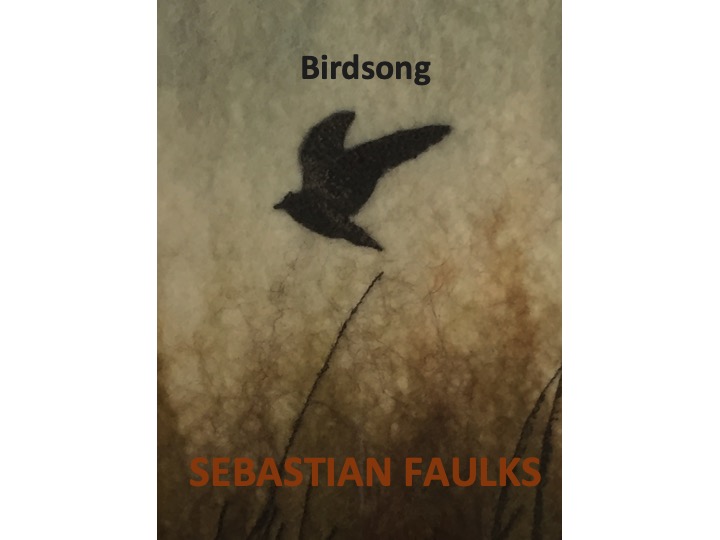
Review – ‘Birdsong’ by Sebastian Faulks

The horror of the First World War inspired (if that is the right word) a great outpouring of literature and other arts. But it is fascinating to see how the combatants themselves responded to the unspeakable events that they were witness to, compared to later writers. The War is especially renowned for the poetry it inspired – all British schoolchildren are familiar with the works of Rupert Brook, Wilfred Owen, Siegfried Sassoon and many others. It is as if the only possible response to such carnage, from those who directly experienced it, was a visceral outpouring utilising the most concentrated form of literature we have – poetry. Nothing else could match the terrifying intensity of their subject matter. Perhaps the novel seemed to artificial, too contrived for those that the war had tested to destruction. Its interesting, to me at least, that those who choose a longer form often used biography – think of Graves’ ‘Goodbye to All That’ or Sassoon’s ‘Memoirs of an Infantry Officer’.

But the novelists eventually got going, and once started have never stopped. Sebastian Faulks’ ‘Birdsong’ is one of several relatively recent efforts by British writers. Now 25 years old, the novel tells the story of the western front as experienced by a young officer called Stephen Wraysford. The horror of the trenches is prefaced by an account of a love affair Stephen had in France a few years before the war began.  An account of Stephen’s descendants 50 years after the war completes the structure of the story.

The central part of the book dealing with the trenches and tunnels of the western front is staggering in its no-holds barred account of what the soldiers had to endure. Some of it I could hardly bear to read. In the episode where Stephen and Jack Firebrace are trapped underground in a tunnel blown up by the Germans I felt gripped by claustrophobia – to the extent that I felt myself spontaneously  lashing out with my arms to confirm that I was indeed in my study and not in that god-forsaken tunnel.

Beyond simply relating the nature of life under fire the story also examines the psychological effects on the men and their attempts to retain some vestige of humanity under unendurable conditions. The scene in which Stephen and Weir, facing potential imminent death, argue over the fate of a canary powerfully brought home to me how people’s conception of right and wrong can shine through – even in extremis. The portrayal of the mentality of the soldiers as they went into action – from almost paralysed with fear to euphoria at being alive and finally to unhinged savagery, also rung true. And Faulkes makes clear the long-term consequences of this repeated exposure to unbearable horrors – all of these men suffered untold psychological damage – PTSD hardly does it justice. What must western Europe have been like in the years after the war when entire nations must have been traumatised ?

Whilst I enjoyed (again probably not the right word) the chapters about the war I was not convinced by the rest of the book. It is good to be reminded that people who are caught up in wars had a life that preceded it ; and that life will go on, no matter how intolerable it may seem at times. But to spend the first 100-odd pages on an unconvincing (to me) love story was like leaving the warm-up act on stage for far too long. I do see the logic of the final section, set fifty years after the war – it is quite a clever way of finishing off the story without using a standard epilogue. But again I couldn’t get very interested in the lives of this younger generation ; they were just too bland and self-obsessed compared with the horror of what went before – but I suppose that is the reality of it – those men died so that we remained free to be as boring and selfish as we like.

So all-in-all a very powerful account of war somewhat diluted by the authors desire to stitch these events into ‘The Great Chain of Being’.

Review : Nine Perfect Strangers by Liane Moriarty

Throwing a diverse group of people together by chance or design – an ailing aircraft, a sinking ship, a burning building – and subjecting them to extreme events is an staple beloved especially of Hollywood. Under pressure of events the carefully fabricated personas of those trapped together are deconstructed and the protagonists forced to look into their souls – or at least confront the reality of their little lives. Those who survive we expect to see transformed, usually for the better.

Liane Moriarty gives the genre a new twist with her nine guests  who rock up to an exclusive Australian health resort expecting the usual expensive round of fasting, exercise and New-Age bullshit.  Most arrive in a state of resigned cynicism, expecting little more than a few days relief from their humdrum problems. Little do they know that their Russian hostess, Macha – a beautiful, driven, former Corporate Supremo – takes their transformation far more seriously than they do themselves.  

The plot follows the usual conventions of the genre – the looming disaster is forewarned by a series of minor, but escalating, disconcerting events orchestrated by Masha and her team : unacknowledged searching of possessions, uninvited entering of bedrooms, practically forced extraction of blood samples. But these intimations of the trials to come fail to convince the guests that they are undergoing anything other than Masha’s radical therapy. Only when one of the guests (Heather, a midwife, whose son has committed suicide) realises that Masha has been drugging them does the precariousness of their situation dawn on them …but too late. 

I won’t spoil the plot by describing the trials that Masha has prepared for her guests. Suffice it to say that they are sufficiently grave to provoke the anguished navel-gazing that she, and we, expected. Unfortunately, for me at least, their ordeal did not lead to any profound insights into the human condition. At best the characters became a little nicer, a little less paranoid, a little more at ease with themselves. 

So a story with an interesting set-up fizzled out in a credulity-straining climax and a feel-good (over-extended) ending.  It felt to me like a book rushed out to cash in on the success of ‘Big Little Lies’.

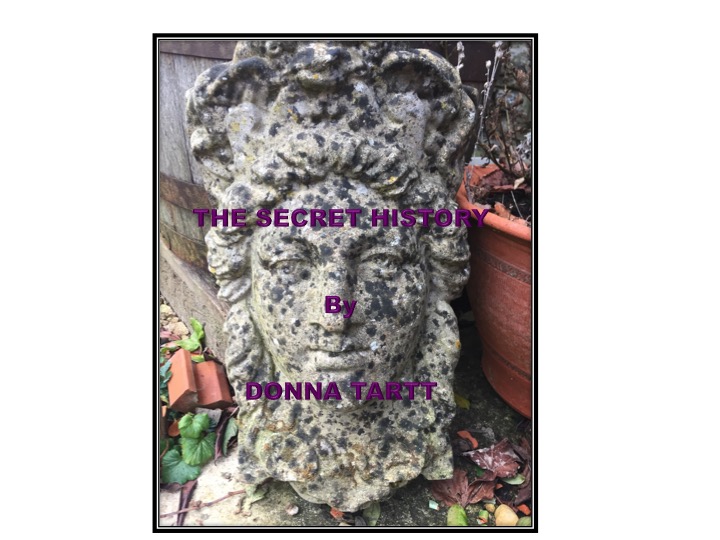
Introduction: The Secret History by Donna Tartt.

For a certain type of romantic this must be an incredibly seductive read. What could be more infatuating than an inaccessible clique of students – rich, brilliant, glamorous, arrogant, vulnerable – who devote themselves to The Classics at an exclusive New England college? Who, encouraged by their charismatic teacher, strive not only to understand ancient Greece but to immerse themselves in its myths. Who seek, through their recondite knowledge, to distance themselves from the mundanity of 20th Century America by recreating a Dionysian world where feeling and sensuousness transcend mere rationality.

Such is the group of students that our hick Californian narrator, Richard Papen, encounters when he arrives at Hampden College, Vermont. Like many a reader of the book he is smitten by the glamour of these exotic classicists. But by the time he manages to establish himself in their group it is clear that something has profoundly shaken the self-confident insouciance of his new friends. What is their secret, and why does it lead inexorably to murder?

We already know from the first lines of the book that the group (including Richard) has killed Bunny – one of their fellow-students. So we are led to expect that the book will be an investigation of what caused them to commit this atrocious act and what the consequences of it will be. These are serious issues and led me, at least, to anticipate a forensic psychological examination of the repercussions of the murder on the conspirators who carried it out.    

It all starts well enough with a well-drawn cast of characters – Henry the aloof, (?) unfeeling genius who is the driving force of the group. Charles and Camilla (not those ones!) the twins, mysterious and harbouring secrets. Francis the gay dandy and extravert. Bunny, the more worldly and not too bright freeloader who ends up at the bottom of a ravine. And Richard our (?) unreliable narrator. 

The writing is impeccable – if anything Tartt’s beautiful phrasing is just too smooth and mellifluous for the grisly events she relates – and the plot is fascinating, up to a point. I wonder how many of you will guess the ending (or part of it) one hundred pages before you get there. To me, at least, the second half of the book is much too long with several episodes which seemed merely to becalm the story rather than move it along – though I’m sure others would argue that these added to the psychological intensity.

None of this though goes to the heart of the matter which is how the characters evolve in reaction to the planning and execution of their crime. In tackling this subject matter Tartt is courting comparison with writers such as Dostoevsky who in ‘Crime and Punishment’ (one of the greatest books ever written) looked at the impact of a similarly premeditated murder on the psyche of another arrogant student. Can ‘The Secret History’ bear such a comparison? Do the motivations of the group stand up to scrutiny? Is there a believable development of character in any of the participants, consequent upon the crime they have committed? Do they come across as real human beings struggling with the ramifications of their profound and irreversible act – or are they just characters in a book?

What do you think?